Friday, October 10, 2008

Rijumati’s travels: Parts 1-2-3-4-5-6-7

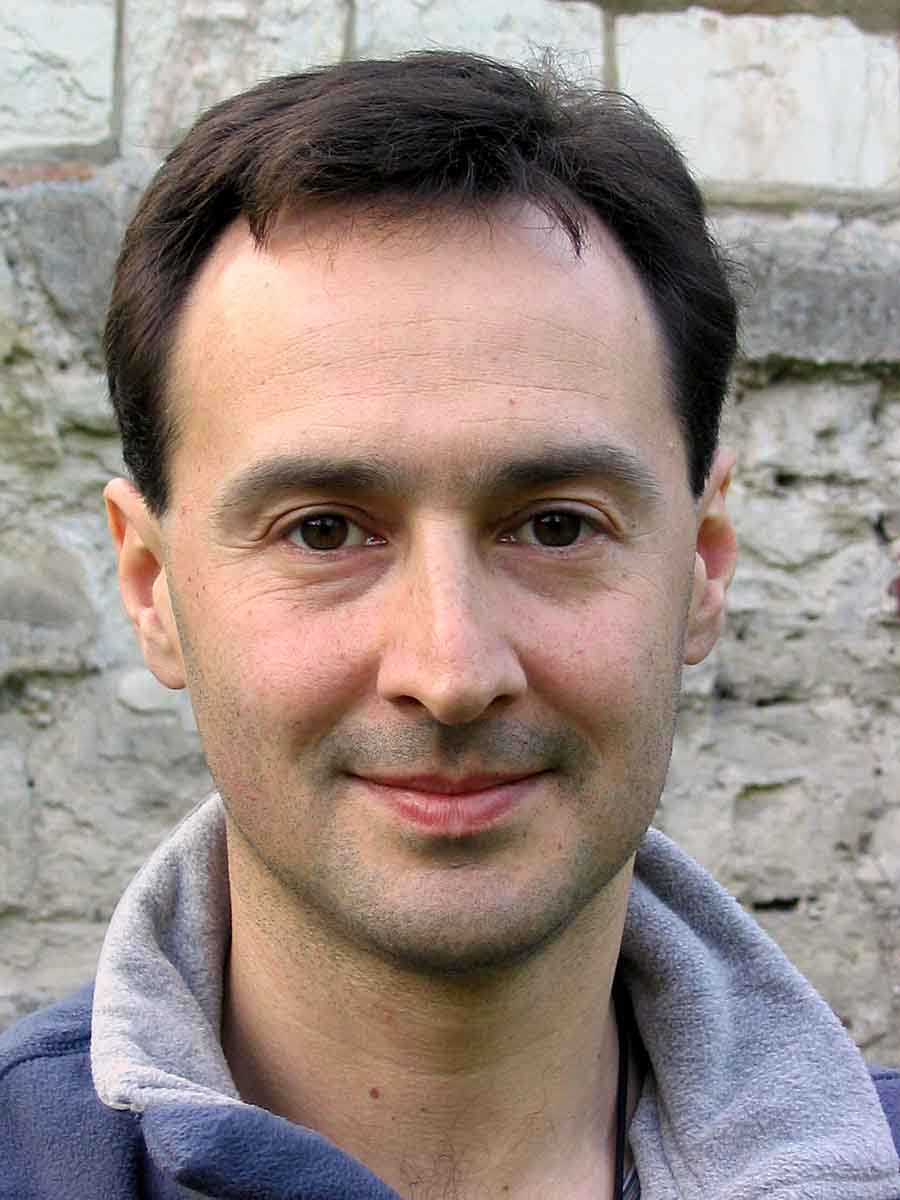
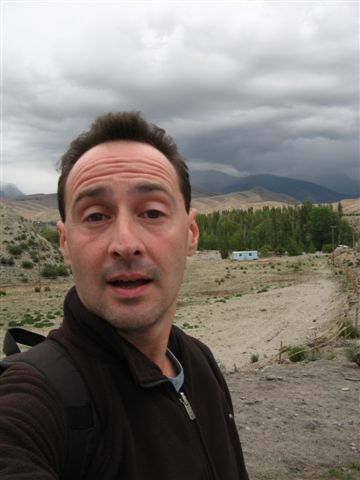
FWBO News is pleased to present these excerpts from the travel diaries of Rijumati.

For nearly a year now he has been travelling around the world, almost entirely avoiding air travel.

Rijumati is an Order Member who for many years was one of the pillars of Windhorse:Evolution, the FWBO’s large Right Livelihood business in Cambridge, UK. The Western Buddhist Order has always contained people following a very wide variety of lifestyles, and they have always been able to move freely between them, based on the Sangharakshita’s dictum “commitment is primary, lifestyle secondary”. Rijumati’s diary is living proof of this. Some of the letters were originally published in Shabda, the Order’s monthly journal.

Labels: ,

Friday, September 12, 2008

Munisha on Young People and Buddhist Ethics: Tradition and Commonsense

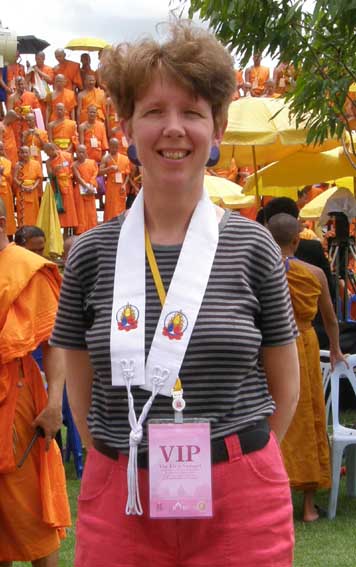
Munisha at the first conference of the International Association of Buddhist Universities in BangkokA year on from an assignment working for Bhutan's Ministry of Education, the FWBO's Clear Vision Trust (www.clear-vision.org) has just returned from an international conference on Buddhism and Ethics, held in Thailand near Bangkok.As education officer at Clear Vision, Munisha was invited to give a presentation on 'Using Video to teach Buddhist Ethics in British Schools' at the first conference of the International Association of Buddhist Universities (IABU). (The FWBO's Dharmapala College is a member of the IABU).

Munisha's paper, titled 'Young People and Buddhist Ethics: Tradition and Commonsense' is available on FWBO Features here. This is a longer, written version of her PowerPoint presentation to the conference, which included video clips.

She writes:

“It was extraordinary to be part of a gathering of up to 3000 Buddhists, mostly Asian monks, as well as nuns and a small number of westerners. I went with Mokshapriya and Aparajita. Among the robes of yellow or brown or stylish grey linen, our kesas attracted a fair amount of interest, as did our display of Clear Vision DVDs for schools. The Dharma is not yet available in such formats in Asia!

"My strong sense is that young people of Buddhist background are losing touch with Buddhism, both in the UK and across Asia. You have to wonder whether there will be another generation of lay Buddhists as young people often know nothing of the Dharma and are less and less interested in tradition. To be fair, there were conference presentations from people who are running Dharma activities for young people in Burma, Thailand and Sri Lanka, one or two of them innovative, but still I suspect they are exceptions.Meanwhile, some very good teaching of Buddhism for young people is being delivered in British schools, by and for non-Buddhists, using modern teaching materials such as Clear Vision's. If Asian young people are to be interested in the Dharma, I'd argue Asian Buddhists could benefit from seeing what we are doing here in Britain.

"We went hoping to spread the word about our materials and invite sponsorship and dana. It was a bonus to meet Asian Buddhists who approached us to tell us of their respect for Bhante and the importance of his work for the future of Buddhism. Then there's my favourite souvenir from the conference pack: a mustard yellow umbrella with a limb of the Eightfold Path printed on each section!”

Click here to see what Clear Vision has to offer school teachers and students.

Labels: , , , ,

Wednesday, September 10, 2008

Smritiratna's letter from the Forest: Insight retreats in Scotland

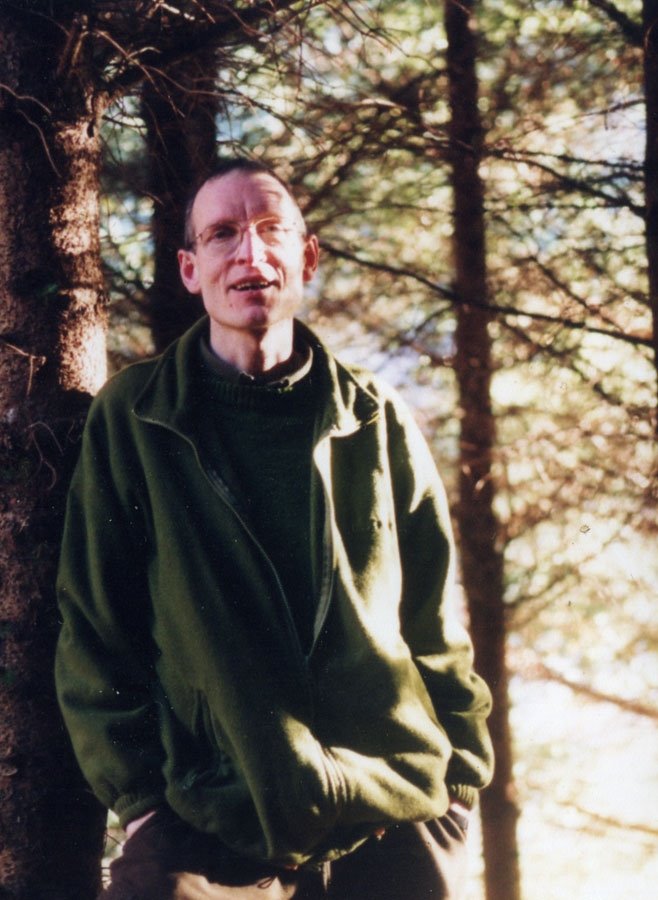
Smritiratna is an Order Member who has for some years now been a resident teacher at the FWBO’s Dhanakosa Retreat Centre in Scotland. Between retreats, he lives in the woods as a hermit, and has written FWBO News a ‘Letter from the Forest’.

In it he describes his coming three-month retreat at Guhyaloka in Spain and his hopes for the ‘Stilling and Seeing Through’ insight retreats he will be leading on his return. If you would like to know more about these retreats, you could either read his long and detailed article (click here) or a shorter one by a retreatant (click here) or else try the websites of Dhanakosa or Vajraloka.

“Dear All,

“I am writing this at the window of the forest cabin where I spend much of my time these days, a mile from Dhanakosa Retreat Centre in Scotland. Looking up, a profusion of green leaves meets my gaze, thousands of grasses and ferns, spruces and larches, oaks and willows, birches and rowans, lichens and mosses. This rich variety arises in response to the rains that come so often here. Without the rains there would be only rock and sand as far as the eye could see. But the rains give life to the earth and green things flourish.

“This puts me in mind of the first teaching of the Buddha, the one celebrated by Dharma Day at the full moon of the Indian month Asalha (June/July). I believe the torrential rains of the Indian monsoon commence around mid-June. So this first outpouring of the Dharma teaching of the Buddha was accompanied by ‘the soft thunder of the rain on leaves’. It came to be known as the Dhamma-cakka-ppavattana Sutta, (the ‘Dhamma-wheel-set-rolling’). The new Buddha has sought out the five ascetics who had shunned him before. Now deeply moved by his appearance and the quality of his presence among them, the five open their hearts once more and their teacher expounds the Four Noble Truths and Noble Eightfold Path. Transcendental Insight arises first in Kondanna. The Truth is out, the Dharma Wheel set rolling, and, eight-spoked like the Eightfold Path, it has rolled down the centuries, rolled through the lives of generations of the Buddha’s disciples and is rolling still.

"Two years ago I spent the Autumn at Guhyaloka, Spain, on the Vihara retreat for Dharmacharis. We were in silence for ten weeks. As the basis of my daily practice, I chose this first Sutta of the Buddha, together with his second. Following the Eightfold Path as my system of practises, I cultivated vision and devotion, made efforts to maintain good moods, practised mindfulness and a range of meditations in accord with Bhante Sangharakshita’s system. Day and night I returned to the theme of impermanence, a pile of animal bones on my shrine, laid out like a skeleton at the feet of the Buddhas. Every day I sat before them in meditations – letting go the aggregates as best I could, and opening my heart to the Buddhas and All.

"This system proved effective so the following year, when I introduced insight meditations on the ‘Stilling and Seeing Through’ retreats at Dhanakosa, they were framed within the Noble Eightfold Path. Practised as a spiral path, you wheel around it over and over. Each new glimpse of the Vision sends a new ripple through devotion, speech, action, livelihood, effort, mindfulness, meditation, stirring new insights into the Vision that in turn send a new wave though the eight spokes or limbs of the Dharma life.

"By the time you read this I’ll be at Guhyaloka for another three month retreat. During the life of the Buddha, many of his disciples were forest renunciates for whom the annual Rains Retreat was regarded as an essential part of their practise. For nine months they’d wander from place to place, living the Dharma life in the open air, sharing the Dharma with the people. But for the three months of the monsoon rains, when the roads and paths were impassable, they would camp together in communities, dwelling in caves or temporary huts. These were the annual Rains Retreats. Inspired by their example, I plan to do a three month retreat every year from now on. This year at Guhyaloka seven Dharmacharis will attend for the whole three months while another nine will attend for one or two months.

"I’ll return by December, in time to lead another Stilling and Seeing Through retreat, and then another at Vajraloka Retreat Centre, Wales. These retreats assume prior knowledge of the mindfulness of breathing and metta bhavana, also a basic understanding of the Dharma and of the Sevenfold Puja. For the first few days we’ll be settling and softening, in mindfulness and metta. Then we’ll contemplate the natural elements and spend a day on ‘transience and true refuge’ before returning to ‘visionary devotion’ at the end. If you would like to know more about these retreats, you could either read my long and detailed article (click here) or Joe’s short one (click here) or else try the websites of Dhanakosa or Vajraloka.

"Bye for now!

"Yours truly,Smritiratna.

Labels: , , ,

Monday, September 1, 2008

Environmental Audit and action plan at the London Buddhist Centre

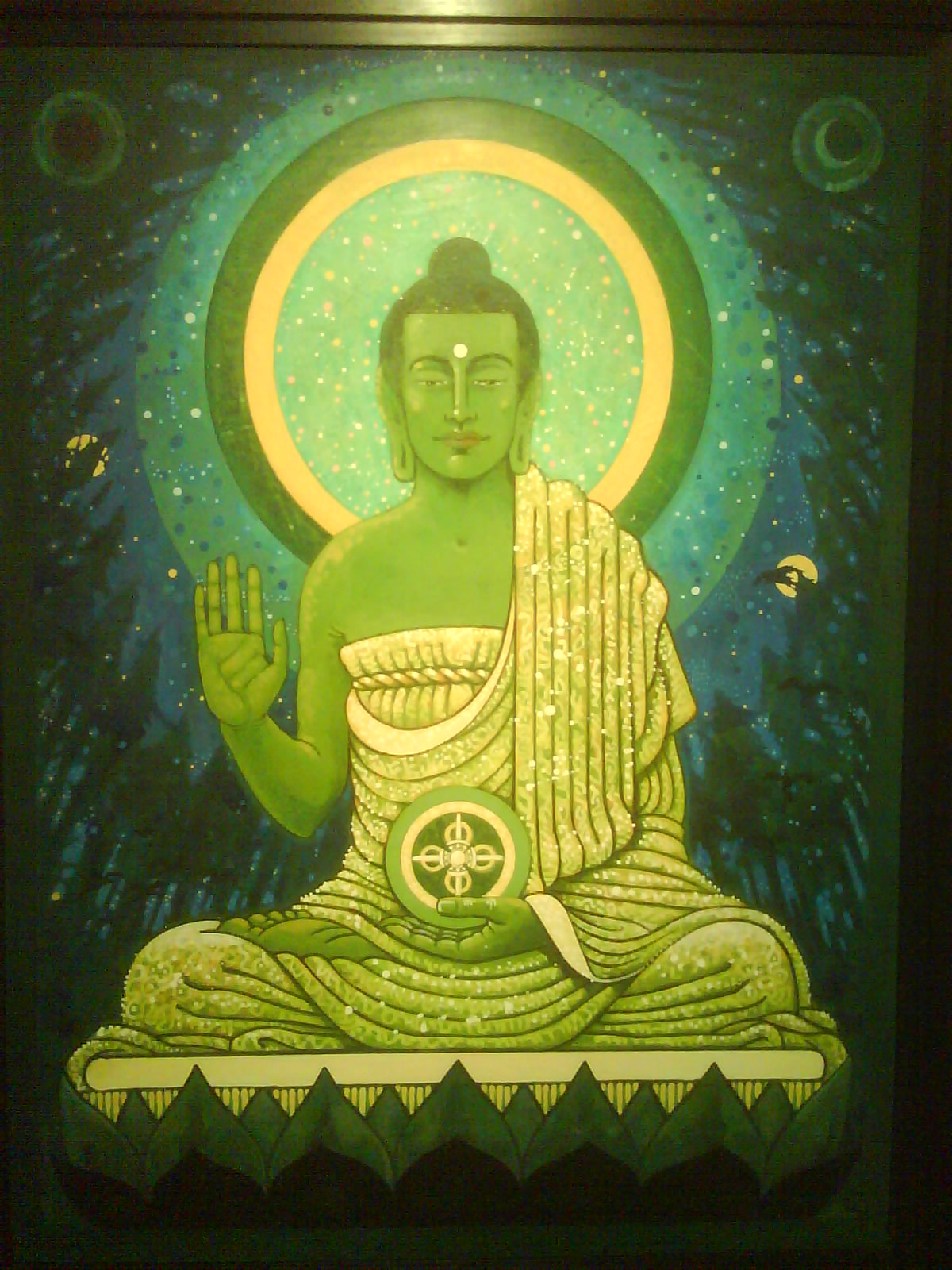
In 2007 the FWBO's London Buddhist Centre celebrated the year of Amoghasiddhi, the Green Buddha of Action and Fearlessness.

As part of this they focussed attention on taking practical action to address environmental issues, exploring how Buddhism teaches us to lead a more simple and less wasteful life, more in harmony with the environment.

Their report, titled 'Environmental Review of the London Buddhist Centre', can be read in full here. Thanks to the LBC for permission to reproduce it.

The report comes from a series of ‘environmental audits’ which were carried out in and around the LBC’s ‘Buddhist Village’, covering many of the businesses and communities that are linked to the LBC as well as the centre itself. It summarises the main findings of those environmental audits – all of which include commitments to action, whether reducing direct environmental impacts, working in partnership with others on environmental issues, or by raising awareness of why and how we can all take action on the environment.

Labels: ,

Sunday, June 8, 2008

Going on retreat - for three years!

VessantaraVessantara was ordained into the Western Buddhist Order in 1974, and is well-known as the author of ‘Meeting the Buddhas’ as well as a number of other books. He’s led a long and active life in the Order, travelling and speaking widely – see for instance his talks on Free Buddhist Audio for a sample…

But later this month, he’s off – on a three-year retreat! Most people involved in the FWBO have done at least some retreats – often planned using our website GoingOnRetreat.com – but not many have done one lasting three whole years – and it could be longer. Not surprisingly he’s been asked many questions about it – and here are some of his answers.

FWBO News wishes him, and his partner Vijayamala, all good wishes as they embark on this major undertaking.

Vessantara says -

"I'm planning to do a long retreat, starting at the end of June. Here are answers to some of the questions I've often been asked about it:

Where are you going to do your retreat?

"In southern-central France in the Auvergne. It's about 2,000 feet (700 metres) up in the Massif Central. From near where we're staying you can see the range of mountains that includes the Puy de Dome. You can also see the golden roof of the temple of the Karma Kagyu Tibetan Buddhist centre founded by the late Gendun Rinpoche.

Why aren't you doing it at an FWBO place like Guhyaloka or Sudarshanaloka?

"I would be very happy to do so, except for one factor: I really want regular access to someone experienced who can guide my retreat. I have done quite a bit of solitary retreat over the years, as well as living at Vajraloka and Guhyaloka. Whilst they've been very useful, I've come to the conclusion that I would make much better progress with regular access to someone to help me sharpen up my practice, point out my blind spots and bad habits, and generally help me to 'steer to the deep'. So when Lama Lhundrup offered to help Order members who wanted to do long meditation retreat, I decided to take him up on his offer.

Who's Lama Lhundrup?

"He's a German-born senior disciple of Gendun Rinpoche, whom several Order members have got to know through meetings connected with the European Buddhist Union. Last year Subhuti and Dhammarati invited him to give a seminar on Gampopa's Jewel Ornament of Liberation at Madhyamaloka, where I met him. Lama Lhundrup's main work is guiding people in long retreats, so we talked a lot to him about meditation and retreat. Those discussions stirred up the aspiration to do a long retreat that I have felt for many years, but the conditions have never been right.

Why are you doing the retreat with Vijayamala?

"I'd originally thought of doing a long solitary retreat. When I talked to Vijayamala she was okay with that, but said it was something that she would also very much like to do. Lama Lhundrup's experience is that westerners can become too isolated and self-absorbed in solitary retreat, so all their long retreats are in groups. He himself did a three-year retreat with his wife. Then they both took monastic ordination and did further retreats in single-sex groups. (He has done nine years of retreat altogether.) That experience of practising with his wife, which he felt was very effective, means that he is open to helping couples, provided they are mature enough, to practise together.

When will you start your long retreat?

"We'll leave the UK at the end of June, and spend a couple of weeks or so getting settled in. Then we'll find an auspicious date to start. (The 18th of July is Full Moon.)

How long are you planning to do?

"Lama Lhundrup says that in the time-limited three-year group retreats that he guides, people often spend a year getting into it, a year deeply immersed, and then a year anticipating the end of the retreat. So he advised me to leave the finishing date of the retreat open. In that way it becomes just how you are living your life. So I'm telling people that I'm planning to do 'at least three years'.

How will you spend your time?

"On the trial retreat I got up at 5am and did ten or eleven hours' meditation a day in four sessions, as well as a small amount of Dharma study. I also did Hatha Yoga and went running every second day. I imagine my programme for the long retreat will be similar to that for most of the time.

What practices will you be doing?

"I'll carry on with the same practices that I do now. I'll focus mainly on visualization, as well as some formless meditation. On the trial retreat I concentrated on Vajrasattva practice, which felt like a good preparation for a long retreat. I did getting on for 40, 000 mantras. When I lived at Vajraloka in 1980 I did the whole Vajrasattva foundation yoga with 100, 000 mantras. It felt very different this time, less concerned with purifying specific negative karmas, more just with tendencies towards unskilfulness. As the weeks went by I relaxed more and more, and the light-nectar felt less of a purification and more just a blessing.

Will you leave the retreat at all?

"Apart from going for walks or runs in the local area, I don't plan to leave the place at all. As my parents both died in the early 1990s, I'm in the fortunate position of not having any dependents. I have two brothers, but if anything happened to them there are others who can look after them. If one of them died I wouldn't come back for the funeral. I would stay in retreat and dedicate practice for their benefit. I'm most likely to have to go out to see a dentist, as I'm a bit long in the tooth these days and I don't expect they will happily last three years without giving me any trouble.

Are you excited?

"No, I don't feel excited, just deeply contented at the prospect of being able to devote myself to the Dharma undistractedly.

What do you hope to get from it?

"I don't like that question very much. I don't like to anticipate what will happen, and I'm not doing the retreat in order to gain anything. I hope to strengthen the foundations of my practice, to come closer to the Buddhas and Bodhisattvas, and to become more of a resource for other people. Years ago I gave a short talk on 'Solitary Retreat' at Padmaloka as part of a symposium chaired by Bhante. At the end he got up and said "That was a very good talk by Vessantara. There was only one thing that he didn't say, and that is that one goes away on retreat in order to come back." That was a very strong teaching for me. I had given a talk about retreat without setting it in the whole context of the Bodhisattva ideal. These days, thankfully, I am rather more in touch with the Bodhisattva spirit. So I hope that from the retreat I will gain experience of meditation and long retreats that I can come back and share with other interested Order members.

Will you be receiving letters?

"No, sorry. On a retreat as intensive as this correspondence and news of the outside world very easily become a distraction. Lhundrup particularly counselled me against keeping in contact with people for whom I fulfilled a particular role - such as private preceptor or kalyana mitra. In a way the whole purpose of the retreat is to let go of being 'someone', having a particular identity. Correspondence with people in relation to whom I have a particular position can easily interfere with that process.

"Of course I shall be thinking of people I've ordained, and all those to whom I'm KM as well as all my friends in the FWBO. (I currently make a practice of calling to mind in meditation all the men I've ordained and reciting mantras for them.) I won't be reading Shabda, or Sanghajala, or FWBO News,but Maitrivajri has kindly agreed to let me and Vijayamala know if Order members are seriously ill or die, so we can dedicate some practice to them. I will also write to Shabda from time to time, to let people know how I'm getting on.

"My experience of doing solitary retreats is that I feel very close to people - strongly linked to them on a mental level. So I shall be thinking of Bhante and all of you, will be wishing you all well with your lives and Dharma practice. Although there will be nothing obvious to show for it, I shall still be deeply involved in the life of the FWBO".

Vessantara's website is at www.vessantara.net

Labels: ,

Thursday, May 8, 2008

NVC in the FWBO: Heart-to-Heart Communication

by Shantigarbha

Out beyond ideas of wrongdoing and rightdoing,
there is a field. I’ll meet you there.

- Rumi

An unlikely ‘guru’
The first time I heard Marshall Rosenberg talk was in London in 2002. I’d heard about him and Nonviolent Communication (NVC) from Prasannasiddhi (another member of the Western Buddhist Order), who first got interested and became a trainer. I’d also heard Sangharakshita, the founder of the Western Buddhist Order mentioning Prasannasiddhi and the work he was doing in the Order.

So there I was, in a crowd of around 400 people, waiting for the talk to start. There were several people standing at the front, to the side of the stage, talking. One of them was a man who looked to be in his late sixties, dressed casually, even a bit scruffily, and with what I would describe as a gloomy, even ‘hangdog’ expression. I hadn’t yet seen a photo of Marshall Rosenberg at that time, so if someone had turned to me and said, ‘Look, there he is, he’s the one who’s going to give the talk.’ I would have said, ‘No way!’

Anyway, after a while the man with the hangdog expression went up onto the stage, sat down, and started talking about Nonviolent Communication. Why was I there? Well, there was the obvious connection with Buddhism, with the First Precept of ‘ahimsa’ – Nonviolence. Marshall traced his use of the term to Martin Luther King’s ‘Nonviolent Direct Action’ and further back to Gandhi’s programme of Nonviolent Action. He said that NVC was not just about personal development and interpersonal conflicts – it was also about radical social change. I was happy to hear this, as I’d lost hope of integrating these two burning interests in my present life. I must confess I don’t remember understanding much else of what he said that evening. It sounded plausible, but there was nothing I could put my finger on and say, ‘Ah, yes, that’s it!’

When it first clicked
I had to wait for that moment until I’d done a Foundation Training with Gina Lawrie and was on a Deepening plus Empathy training with Bridget Belgrave (I mention these two UK trainers because, apart from Marshall, they have supported me the most in my understanding and practice of NVC). On this second training, Bridget was coaching a participant to deepening their understanding and skills in a life crisis. With a shock, I realised that this was where I came in – coaching people. I told myself that she was doing what I was already doing with friends and other Buddhists. The only difference was that she was taking 30-40 minutes to do what took me several months. And all the time she supported them so profoundly, they remained in control of their life, their inner world. So this was my ‘Aha!’ moment, watching Bridget coaching and identifying with her role and the profoundly sensitive way she contributed to life. I realised that if I learned her skills and used them, I would enjoy a profoundly meaningful life.

To my disappointment, I couldn’t just step into Bridget’s shoes. It took me a couple of years to find my feet with these skills, and during that time I went through a lot of heartache and inner growth! I needed to get in touch with my own needs before I could support others to get in touch with theirs. I also needed to learn some facilitation skills that weren’t apparent to me that first time, when Bridget was demonstrating them so effortlessly!

The language of disconnection
So now, when I’m introducing NVC to a new group of people, what do I say? I start by saying, ‘Conflict is inevitable, violence isn’t’. What I mean by this is that I find it difficult to imagine a world where there is no conflict – conflict that arises from differences in temperament, outlook, religious beliefs, worldviews. However, I can imagine a world in which we find solutions to conflict, which don’t involve violence. (By the way, there doesn’t need to be a conflict present for NVC to work – it can deepen connections and understanding even when no conflict is present).

Here’s the situation: there are two people living together (they could be partners, could be community members). They are both standing in the kitchen. They are both in pain. One says to the other, “You’re a slob!” The other replies, “You’re OCD!” (Obsessive-Compulsive Disorder – this translates as ‘You’re obsessed with how clean the kitchen is!’) So they tell each other their thoughts about what the other one is – they use labels: ‘slob’, ‘OCD’.

Hearing these labels, the pain in both of them increases, and the first one says, “You’re a bad person to live with.” The other replies, “You’re wrong about that.” So they make judgements of each other in terms of ‘good, bad, right and wrong’.

The pain increases and they start overtly blaming each other and imposing their judgement: “It’s your fault – you should be more mindful!” And the other replies, “This is your problem – own it! You should go and see a psychiatrist about it.”

Hearing the ‘shoulds’, the pain on both sides increases and they switch to the language of no choice, “You can’t carry on like this. It’s against the rules.” The other replies, “You can’t talk to me like that – it’s not allowed.”

And to finish they resort to demands (threats) to make their point, “If you don’t tidy up the kitchen this evening then you’ve got to leave!” And the other replies, “If you don’t back off right now, I will!”

Does this sound familiar? In my experience, this is the kind of language that comes out of people’s mouths when they are in conflict. I learned this language as I was growing up – at school, at home, in the various jobs I’ve had. It’s the kind of language that comes out of my mouth when I’m in pain – when I’m trying to express my pain to another person. And the sad thing is, it doesn’t serve me – it doesn’t get me the understanding and co-operation that I’m looking for when I’m in pain. In fact, it does the opposite – it increases the pain and creates disconnection.

So I call labels, judgements, blame, imposing my judgement, no choice and demands, the Language of Disconnection. And I’m curious what comes up for you when you hear this language? Sadness? Anger? Fear of losing connection? Wondering how to apply the speech precepts in this situation?

Heart-to-heart Connection
I’m glad to say that’s not the end of the story. I’m interested in what happens when we get connected at a heart level. There are many ways to do this, and NVC is one of them. So how do I go about creating a heart-to-heart connection – to find out what is in the heart of these two people? The way that I’ve found to be most effective is to get in touch with the basic needs on both sides – the ‘good reasons’ why they are acting and speaking in this way. And these ‘needs’ are distinct from any particular strategy that the two of them might have for fulfilling them.

What’s important to the first person, the one who said, ‘You’re a slob!’? People usually guess: a sense of order, care, mindfulness or awareness, perhaps health.

And what’s important to the other person, the one who said, ‘You’re OCD!’? People usually guess: a sense of perspective and self-responsibility, respect, autonomy, perhaps ease.

This is what I mean by creating a heart-to-heart connection: finding out what is important (what are the needs) on both sides. People usually have an “Aha!” moment just looking at these two lists of needs – realising that there are needs on both sides. OK, so maybe it’s easier for them to identify with one side or the other, but they get a glimpse that both sides are needing something, are longing for something that would enrich their lives.

I’ve found that when people are connected at this level, whether they live in a Buddhist community in the UK, the slums of India, war-torn Sri Lanka, or a US prison, they are only a short distance from finding a solution that honours the needs on both sides, where no-one gives in or gives up.

The intention of NVC
And for me this is the intention of NVC – that I act in this way because I have the intention to create the kind of connection that will lead to everybody’s needs being valued and met. And this for me is the deepest connection with the Dharma – this compassionate intention to connect with a view to enriching the lives of all beings.

List of life-enriching ‘needs’
So what other ‘needs’ would you add to this? What enriches your life? We’ve already got:

* a sense of order
* care for their living space
* mindfulness / awareness
* health
* a sense of perspective
* self-responsibility
* respect
* autonomy
* ease

What would you add to this list? Here’s what I would add:

* love
* honesty
* empathy
* freedom / release
* wholeness
* beauty
* peace
* harmony
* growth
* freshness
* vitality
* to contribute to life
* meaning / inspiration / purpose
* to be valued
* food, air, water, shelter, rest, movement
* safety
* control / choice
* power (empowerment)
* understanding (to understand and to be understood)
* support and encouragement
* consideration
* connection
* closeness
* to matter and belong
* recognition
* self-acceptance
* creativity
* play
* spontaneity / authenticity
* celebrating dreams/goals/values
* mourning (mourning lost dreams and lost lives)

Reaching out to humanity
When I’m doing this with a group of people, I usually ask them at this point: ‘Are there any ‘needs’ on this list that you haven’t been in touch with in the course of your life?’ I haven’t yet heard someone say ‘No’. Then I ask: ‘Do you think that there is anybody in this room who hasn’t been in touch with all of these at some point in their life?’ Again, I haven’t yet heard someone say ‘No’. Then I ask them to reach out in their imaginations to the people in the local town, the country, the continent, the entire world, and ask the same question, ‘Do you imagine that there is a human being who hasn’t been in touch with all of these at some point in their life?’ There’s usually a pause while people do this for themselves. I haven’t yet heard someone say ‘No’.

It’s at these moments that I quiver with a sense of common humanity – a sense of deeply belonging to the human race.

Needs and Enlightenment
I’ve heard some practising Buddhists who say that talking about ‘needs’ won’t get you to Enlightenment. They say that needs are mundane, and don’t lead to the ‘Transcendental’. I deeply appreciate their concern for complete freedom, the ‘inconceivable emancipation’ for the benefit of all beings, and their reluctance to accept a language that might fall short of this.

For myself, I’m confident in my intention: creating the kind of connection that leads to everybody’s needs being met (or ‘Going for the connection, hanging loose to the outcome’). It’s already brought unimagined richness into my life.

Through staying with this intention, I’ve become more present to myself and others. I’ve healed painful memories relating to my childhood. I’ve become healthier and stronger physically. I’ve supported hundreds of people to go more deeply into what’s important to them. I’ve found a way to contribute to life that gives me meaning and purpose, and supports me in other ways. I find that I’m not drawn to the idea of ‘Attainment’ or ‘Insight’ as much as I was in my teens, twenties and thirties. I seem to have found something in the present moment that is more nourishing, more fruitful than the ideas I had about these things. I’m still working on the language and skills to support my intention.

However, I do have two clarifications to offer:

* ‘Getting your needs met’ doesn’t just mean getting them met ‘externally’ – from outside. ‘Needs’ can also be met ‘internally’ by getting in touch with the particular living ‘energy’ of that need.
* My ‘need’ for food doesn’t get met fully by having food in my stomach. As I am interconnected with all beings at the level of basic needs, my ‘need’ for food is only met when all beings have food in their stomachs. Nobody’s needs get met unless everybody’s needs get met.

For ten years before I came across NVC, I was the co-publisher and co-editor of Urthona – the Buddhist arts magazine. For those ten years, and many before it, the Arts were the love of my life: a deep source of inspiration and connection. Now I find that I can get those things freshly and bountifully through my connection with myself and the people around me.

Perhaps I’ve just matured with the passing of time. I like to think that practising and teaching NVC has contributed. I don’t know whether exploring and practising NVC will take me ‘all the way to Enlightenment’.I am hopeful that exploring NVC will help me and others who follow the Dharma to communicate more clearly, more creatively and more compassionately.


About the author
Shantigarbha is currently writing a book on Buddhism and NVC, to be published in 2009.

He grew up in Croydon (UK) and studied Latin, Greek & Philosophy at Oxford University. He’s had a variety of jobs including charity fundraising for the Karuna Trust, managing Dharmachakra, working in a psychiatric hospital, working as the Sales and Marketing manager of a software company, publisher and co-editor of
Urthona, the Buddhist arts magazine. While he was managing Dharmachakra, he co-wrote an audio-version of the life of the Buddha, which has sold more than five thousand copies. In 1996 he was ordained into the Western Buddhist Order and given the name ‘Shantigarbha’, which means ‘Seed of Peace’.

He’s been practising Nonviolent Communication for the last six years, teaching it for the last five, and been certified with the Centre for Nonviolent Communication since 2004. He works in the UK, the USA, India and Sri Lanka offering trainings and retreats for Buddhists; public workshops including transforming anger, healing retreats and Year Programmes; trainer development groups; training for prison inmates; training days for teachers and marriage guidance counsellors. He spends time each year running retreats for ‘Dalit’ Buddhists and others in India and working with mixed groups of Sinhalese and Tamils in war-torn Sri Lanka.

He has been a Chapter Convenor and Regional Order Convenor for men in the Eastern Region of the UK, and mediates as a member of the Order Mediators’ Pool (see below for contact details).

He has appeared on Sri Lankan TV to talk about NVC, and writes regular columns on NVC in two UK magazines: Juno (a natural approach to family life) and Funky Raw (raw food).

For more information about Shantigarbha, his trainings in the UK, India and the USA, and his writings, visit www.seedofpeace.org/

Resources
www.cnvc.org/ – the Centre for Nonviolent Communication: information, articles, email newsgroups and international trainings
www.nvc-uk.info/ – NVC Trainers in the UK
www.life-resources-shop.com – NVC books etc. online in the UK
Order Mediation Pool: (mediators with various skill-sets including NVC) Contact Dharmottara: dharmottara[at]ntlworld.com (please replace [at] with the @ sign)

Other members of the FWBO who are sharing NVC (visit www.cnvc.org for contact information where none is given):

* Abhayakirti (UK)
* Aniruddha (India, certified trainer):www.connect-2-life.com/
* Cittapala (UK) www.cittapala.org
* Jayaraja (UK)
* Kumarjeev (India, certified trainer)
* Locana (UK, certified trainer): www.life-at-work.co.uk
* Nuria Murcia (UK and Spain)
* Paul Crosland (UK): www.freelend.org/
* Prasannasiddhi (UK, certified trainer): www.nvc-resolutions.co.uk/
* Sinhaketu (Ireland): www.evolution-uk.org/
* Shona Cameron (UK, certified trainer): www.withunity.co.uk
* Sucimanasa (Germany and the UK)
* Sue Beardon (UK)
* Vajraghanta (UK)
* Vajrasara (UK)

Labels: ,

Saturday, March 8, 2008

New Buddhists in Hungary: two people's stories

FWBO News is pleased to present interviews with two new Buddhists, both unusual in that they are Hungarian gypsies, part of a growing Buddhist sangha within the gypsy community.

To give a little background, a little over four years ago a group of Hungarian gypsies made contact with Subhuti and others from the FWBO. They had heard about the work of Dr. Ambedkar and had been deeply impressed by what they had read of his work and the suffering of his people, the Dalits, or ‘untouchables’ of India. They had in fact come to feel a deep connection with the Dalits of India, even, to see themselves as the Dalits of Europe and Dr Ambedkar’s message of social transformation as being deeply relevant for them.

Since that time Subhuti and others have made many visits to Hungary, most recently earlier this month, and some of Hungary’s new Buddhists have visited both the UK and India.

In his latest visit to Hungary Subhuti interviewed two of our Mitras there, covering a wide range of topics including their personal histories, the general situation of Gypsies in Hungary and how they came to connect with the Dharma and the FWBO. Below is a short excerpt from Janos' story -

“After one month in India, I came back convinced that I was a Buddhist. On a very big retreat in Nagpur for 5,000 people, in January 2006, I had become a Dhammamitra, publicly declaring that the Buddha is my teacher, that I will practise the five precepts, and that TBMSG/FWBO is my spiritual family.

“But back here in Hungary, there were only Hungarian Buddhists, and I could not identify with them. However, people from the Western Buddhist Order/Trailokya Bauddha Mahasangha, both Europeans and Indians, came to stay with us and they were completely different from the Hungarian Buddhists.

“It took me some time to work out what kind of a movement the FWBO in Europe is, because these were white intellectual people who took to Buddhism for reasons that I could not really understand. But they were different from the Hungarian Buddhists I had met, because they were genuinely concerned with social questions. When they come to Hungary they spend time with us, which Hungarian Buddhists don't do. They have become our friends and the connection between us is very good.”

Click here to read Janos' s interview in full, in which he tells in some detail of the conditions of life for gypsies in Hungary and how he came to become a Buddhist.

The second, with Benu, speaks of his personal struggles for a better life. He begins by saying -

"My name is Istvan Lazi. My nickname is Benu. I was born at
Kazincbarcika, in Northern Hungary, in 1987. My family are gypsies. It
is difficult for non-gypsies to understand what that really means. Most
non-gypsies think it is a matter of race or skin colour, but it is not. To be
a gypsy is a belonging. It is to be part of a community where everyone
knows, 'We are gypsies'..." Click here to read the full interview.

If you would like to know more about the FWBO’s work in Hungary or to contribute to it in any way, please contact subhuti.secretary@gmail.com.

You can read previous FWBO News stories about the Hungarian gypsy Buddhists here or on the Dharmaduta students' blog here .

Labels: , ,